Separate the hole size from the tool connection
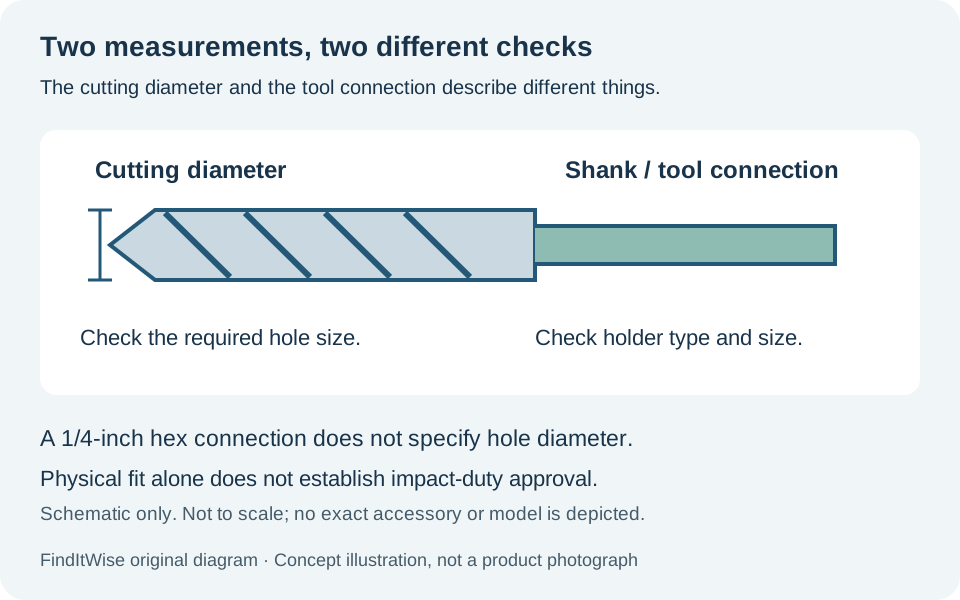
A drill-bit listing can contain several measurements that answer different questions. The cutting diameter describes the nominal hole size the bit is intended to make. The shank is the part held by the tool. Treat those as separate checks rather than assuming that every quarter-inch measurement means the same thing.
Before shopping, write down the hole diameter required by the project and the holder fitted to your tool. A set can contain the required cutting diameter while still being the wrong connection for the tool you planned to use. Checking those two fields first prevents a purchase decision based only on piece count or a familiar brand.
Read the tool’s holder specification
The Makita XDT13Z manufacturer record identifies a quarter-inch hex holder. That measurement describes the accessory connection, not a promise that every compatible accessory cuts a quarter-inch hole. The exact accessory must also be suitable for the tool and application.
By contrast, the Bosch cobalt-family page describes cylindrical shanks for three-jaw drill chucks. It also describes three-flat shanks on bits of 3/16 inch and larger. Three flats and a quarter-inch hex connection are different descriptions; do not treat the word flat as proof that a bit belongs in an impact driver’s holder.
The source identifies this Bosch family for rotary drills/drivers. Physical fit alone does not establish impact-duty approval. Follow the accessory’s intended-tool guidance rather than inferring a rating from the appearance of its shank.
Check each diameter, not just the endpoints
Bosch’s CO14 contents list fourteen pieces from 1/16 through 1/2 inch, including two 1/8-inch bits. A range tells you the endpoints; the contents list tells you which sizes are actually present. The fourteen-piece count therefore does not mean fourteen different diameters.
For a project needing a particular size, look for that exact entry. Do not assume that the next larger assortment adds the size you are missing. It might instead add duplicates of frequently used diameters. Our drill-bit buying guide compares those package decisions separately.
Keep length questions separate too
When a job depends on reach or hole depth, a diameter match does not finish the specification check. Find the exact bit’s working-length and overall-length information, then check the tool and application instructions. A family photograph or a case label does not establish those dimensions for every item inside it.
This guide does not assign a drilling depth to CO14 or infer that a long-looking bit can be used at any depth. If the relevant dimension is absent from the product record, treat it as an unresolved requirement before buying. Asking for a missing specification is more useful than guessing from an image.
Make a short compatibility record
Use a separate line for each question: required cutting diameter, shank type and size, intended tool, material application, and any required length. Fill each line from the exact accessory record or instructions. Keep the tool model beside that record so that a later change of drill or driver does not silently change your assumptions.
For readers still choosing the tool, drill versus impact driver explains the broader distinction. For material selection, black oxide versus cobalt addresses the documented application differences rather than connection size.
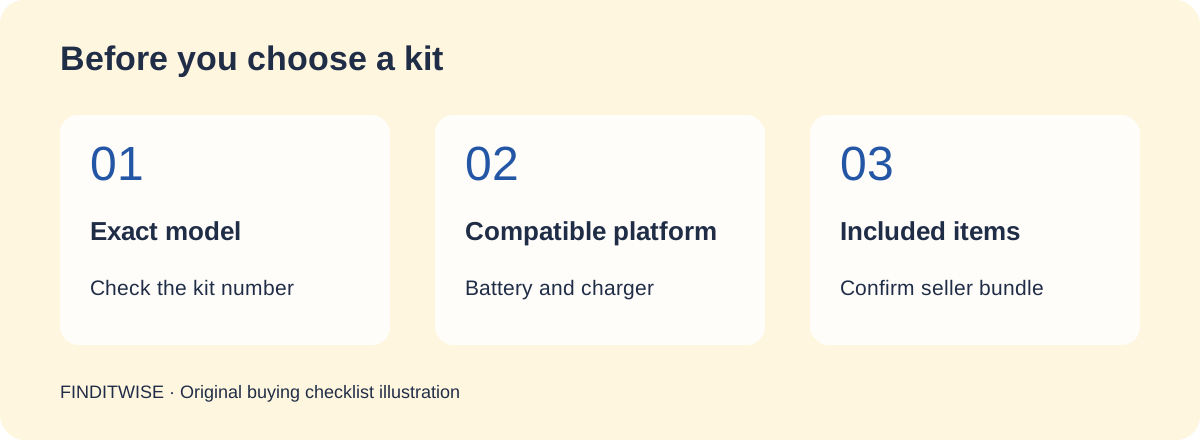
The products here are specification examples, not new performance recommendations. FindItWise has not tested their fit, hole accuracy or durability. Use the checklist to establish what must be verified on the exact product, and confirm the seller’s model and included items before purchasing.
Common questions
Does quarter-inch hex mean a quarter-inch hole?
No. The hex size describes the connection; check the accessory cutting diameter separately.
Does a fourteen-piece set have fourteen different sizes?
Not necessarily. The Bosch CO14 contents include a duplicate 1/8-inch bit.
Sources & references
- Bosch cobalt-family shanks, tool compatibility and CO14 contents — accessed October 19, 2026
- Makita XDT13Z quarter-inch hex holder specification — accessed October 19, 2026