Start at the saw and follow the connection
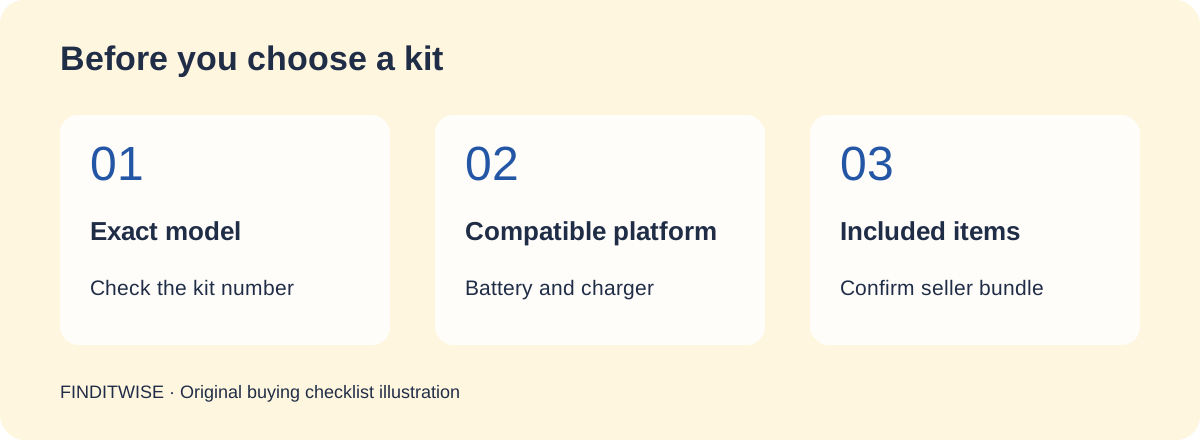
Before buying a circular-saw extraction accessory, write down the saw model, proposed nozzle, hose and extractor. The connection must work across that complete chain. A photograph of a vacuum beside a saw leaves several parts of the purchase unresolved.
Our circular-saw buying guide covers a different selection of saw configurations. This checklist focuses on verifying an extraction connection before ordering the accessories needed to complete it.
Read the exact model coverage
The Makita XSS01/XSS02 manual describes a dust nozzle attached to the saw and a vacuum hose connected to that nozzle. It also lists the nozzle among accessories and notes that package contents can differ by country.
Read the model coverage at the start of the manual, then inspect the relevant illustrations and accessory notes. A shared document is a starting point for checking your tool. Retain the exact model identifier when asking the manufacturer which attachment is required for the selected configuration.
Resolve an accessory page’s model wording
The Makita 419283-5 record identifies a dust-extracting attachment and describes its use with the BSS610 saw. Its heading also refers to XSS01. If your saw has a different identifier, obtain the exact compatibility statement before ordering that part.
That distinction matters when an accessory appears in a search alongside several similar saws. Keep the tool and accessory numbers in separate fields. A resemblance between housings or an adjacent retailer recommendation cannot complete a missing manufacturer match.
Check the hose connection after the nozzle
Once the saw-to-nozzle match is established, check the nozzle-to-hose and hose-to-extractor connections. Record each component’s manufacturer identifier and any specified adapter. If a required size or fitting arrangement is absent from the record you are using, resolve it before placing the order.
The manual’s connection illustration demonstrates an arrangement with a Makita vacuum. It does not provide a complete compatibility statement for every hose you may already own. Compare the equipment you have with the actual specified arrangement rather than treating the word vacuum as a fitting specification.
Compare the parts list with the selected package
Make a list of the nozzle, required fastening parts, hose and any adapters. Check which items the seller actually includes. Where an accessory is optional, add it to the equipment still required for the planned setup. A tool-only offer should be inspected on its own terms.
For another example of model-specific fittings, the jigsaw extraction guide identifies separate attachment and operating-position questions. Keep each tool’s parts record with that tool.
Check operation with the complete arrangement
Read the full saw and extractor instructions before assembling or operating the equipment. Include hose routing, movement of the saw and support for the workpiece in the setup assessment. Once all required components are identified, you can compare an accessory order against a concrete equipment list and avoid buying another part solely to discover that an essential connection remains unresolved.
Sources & references
- saw manufacturer documentation — accessed November 7, 2026
- nozzle manufacturer documentation — accessed November 7, 2026